Key Takeaways
- Magnesium is critical to human health as it supports more than 800 enzymatic reactions in the body, including energy production, muscle contraction and relaxation, nerve signaling, and bone formation.
- There are numerous forms of magnesium. Certain forms may be better for targeted benefits.
- Stomach upset is caused by taking too much elemental magnesium at once (over 350 mg) or taking it on an empty stomach.
- Match the form to your goal: Use citrate or oxide for general deficiency or occasional constipation, glycinate for sleep, and L-threonate for cognitive and memory support.
- Check the Supplement Facts panel for the amount of elemental magnesium.
- Magnesium blocks the absorption of certain antibiotics and osteoporosis drugs. Consult a doctor if you have kidney disease or take PPIs, diuretics, or blood pressure medication.
- Magnesium effectively supports sleep and corrects deficiencies, but lacks strong clinical evidence as a standalone fix for weight management, severe cramps, or generalized stress.
Popular Forms of Magnesium
Magnesium as a dietary supplement is available in many different forms. There are differences in elemental magnesium content, its absorption, and its function in the body. In dietary supplements, magnesium is supplied as a salt, chelate, or complex. The accompanying compound affects elemental magnesium content, solubility, gastrointestinal tolerance, and sometimes provides its own health benefits or physiological effects.4,13 For example, magnesium threonate is promoted for its ability to increase brain magnesium levels, as threonate supports the transport of magnesium into the brain.14-16
Here are the top ten forms of magnesium in order of popularity.4,13,14,17-19 , 38
Glycinate/Bisglycinate
- Elemental Magnesium: 10–14%
- Absorption: Generally considered well absorbed
- General Use: Sleep and relaxation
Citrate
- Elemental Magnesium: 11–16%
- Absorption: Well absorbed
- General Use: Long-established and widely available for general supplementation.
Oxide
- Elemental Magnesium: 60%
- Absorption: Clinical studies consistently show it has a fractional absorption rate of only about 4%
- General Use: Commonly used as a laxative or antacid
L-threonate
- Elemental Magnesium: 7.2–8.0%
- Absorption: Generally considered well absorbed; enhanced brain delivery
- General Use: Premium form positioned for cognitive and sleep support
Malate
- Elemental Magnesium: 11–15.5%
- Absorption: Generally considered well absorbed
- General Use: Moderately popular specialty form, often positioned for energy and muscle support
Aspartate
- Elemental Magnesium: 7.5–10%
- Absorption: Well absorbed
- General Use: Offers no advantage over other forms, and there is concern with excessive aspartate ingestion
Chloride
- Elemental Magnesium: 12–25.5%
- Absorption: Well absorbed
- General Use: Available in oral liquids, flakes, oils, and sprays, but less common in capsules and tablets. Greater likelihood of GI side effects
Taurate
- Elemental Magnesium: 8.9%
- Absorption: Generally considered well absorbed
- General Use: Promoted for cardiovascular support because of its taurine content
Orotate
- Elemental Magnesium: 7.3%
- Absorption: Well absorbed
- General Use: Long-standing premium form marketed primarily for cardiovascular and energy support
Acetyl-taurate
- Elemental Magnesium: 6.7%
- Absorption: Generally considered well absorbed
- General Use: Emerging data show enhanced brain magnesium and taurine delivery
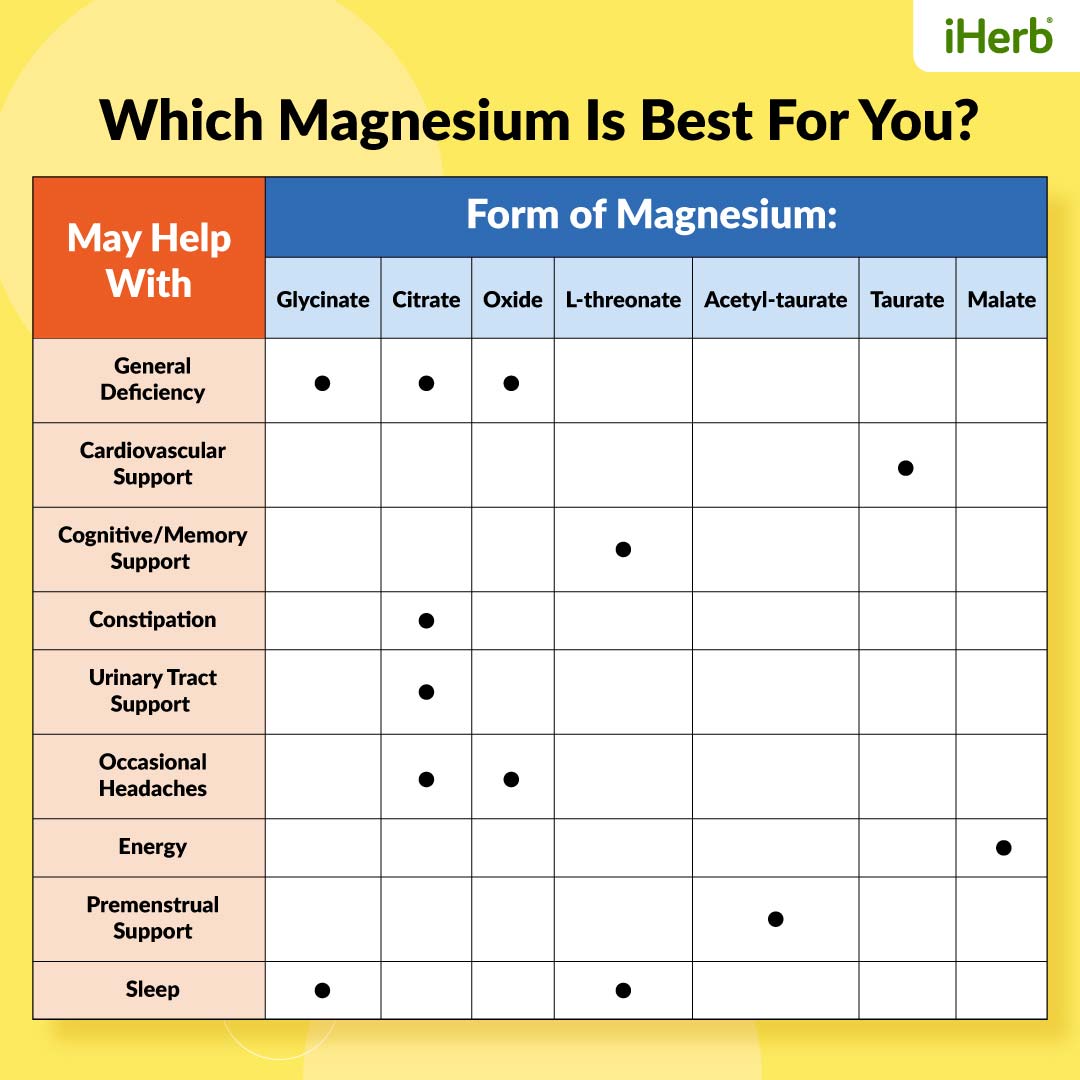
Quick Answer: Which Magnesium Should You Take?
- General deficiency → Glycinate, citrate or oxide
- Cardiovascular support → Taurate or orotate
- Cognitive/memory support → L-threonate
- Constipation → Citrate
- Urinary tract support → Citrate
- Occasional headaches → Citrate or oxide
- Energy → Malate
- Premenstrual support → Acetyl-taurate
- Sleep → Glycinate or L-threonate
What Is Magnesium and Why Does the Body Need It?
Magnesium is the fourth most abundant mineral in the human body and a cofactor in more than 800 enzymatic reactions in the body. It's required for protein synthesis, muscle and nerve function, blood glucose control, blood pressure regulation, and the synthesis of DNA, RNA, and the antioxidant glutathione. An adult body contains roughly 25 grams of magnesium, with 50–60% stored in bone and most of the remainder in soft tissue; less than 1% circulates in the blood, which is why a standard blood test often misses a mild deficiency.1,2
Who Is Most Likely to Fall Short?
An estimated half of adults in the United States consume less magnesium than the recommended dietary intake, according to national nutrition survey data, making magnesium supplementation an important consideration in meeting dietary intake goals.
Certain groups are more likely to suffer from a more significant deficiency of magnesium: people with gastrointestinal conditions that impair absorption (Crohn's disease, celiac disease), type 2 diabetes, alcohol dependence, older adults, and anyone on long-term diuretics or proton pump inhibitors.
A few additional risk factors include: weight-loss surgery such as gastric bypass or gastric sleeve (which reduces the gut surface available for absorption), chronic high stress (the body increases magnesium excretion under sustained stress), and diets heavy in processed foods and added sugars, which tend to displace magnesium-rich whole foods rather than contain much magnesium themselves.1,2
A Closer Look at the Different Forms of Magnesium Supplements
Magnesium Glycinate
Glycinate is magnesium chelated to the amino acid glycine. It's absorbed via more than one intestinal pathway, is well tolerated at higher doses, and causes less of the loose-stool effect that oxide and citrate produce, which is why it's the form most often chosen for nightly, ongoing use rather than short-term correction. Its elemental magnesium content per capsule is lower than that of oxides, so serving sizes tend to be larger (more capsules or a larger amount of powder in a drink mix).4,8,10
Magnesium Citrate
Citrate pairs magnesium with citric acid, a component in energy metabolism. It's well absorbed, inexpensive relative to glycinate, and the citrate component is not merely an inactive carrier. It helps keep magnesium soluble, is metabolized to bicarbonate, and may contribute to a urinary environment less favorable to calcium-oxalate crystallization. At higher doses, the combined osmotic effects of magnesium and citrate can also soften stool and support occasional constipation relief. But at dosages less than 350 mg does not cause any GI effects.7,21,22
Magnesium Oxide
Oxide has the highest elemental magnesium percentage and the lowest cost. Yet this form is widely maligned for two reasons that are not supported by clinical evidence: poor absorption and poor tolerance.
While magnesium oxide contains a high percentage of elemental magnesium by weight, it is widely recognized for its exceptionally low bioavailability. Clinical studies consistently demonstrate that oxide has a fractional absorption rate of only about 4%.38 Because so little of the mineral actually crosses the intestinal wall into the bloodstream, the unabsorbed magnesium remains in the digestive tract—which explains its frequent use as a laxative or antacid rather than a restorative daily supplement. When the primary goal is to correct a general deficiency and actively raise the body's magnesium levels, forms like magnesium citrate and magnesium glycinate meaningfully outperform oxide in absorption and overall efficacy.
Regarding side effects, magnesium oxide may be the best-tolerated form of magnesium at nutritional doses below 450 mg. In a 24-week head-to-head trial with magnesium citrate providing 450 mg of elemental magnesium daily, magnesium oxide produced fewer GI complaints than magnesium citrate. The bottom line is that magnesium oxide is a well-absorbed and tolerated form of magnesium.6,7,22
Magnesium L-Threonate
L-threonate pairs magnesium with L-threonic acid and is specifically formulated to raise magnesium concentrations in brain tissue, unlike most other forms. A 2025 randomized, double-blind, placebo-controlled trial found that six weeks of supplementation improved overall cognitive performance on the NIH (National Institutes of Health) Toolbox composite score, with the largest effects on working and episodic memory, plus a modest improvement in reaction time. A separate 2024 randomized controlled trial found improvements in both subjective and objective sleep quality among adults with self-reported sleep problems. These are promising, peer-reviewed findings worth knowing that the elemental magnesium content is lower per capsule than in other forms, since the differentiator here is where it goes, not how much you get.14-16
Magnesium Malate
Magnesium malate combines magnesium with malic acid, an intermediate compound involved in the citric acid cycle that helps generate cellular energy. Because of this biochemical role, magnesium malate is the form most frequently recommended and marketed for muscle energy, exercise recovery, and relief from muscle cramps. However, the clinical evidence does not fully support these claims. Supplemental malate has not been proven to increase mitochondrial energy production in humans, and recent clinical trials indicate that magnesium supplementation overall is largely ineffective at preventing or stopping muscle cramps. While it remains a highly bioavailable and reasonable form for general daily supplementation, claims that magnesium malate uniquely cures widespread muscle fatigue or cramps exceed the available human evidence.1,4,13
Magnesium Chloride
Magnesium chloride is a highly soluble inorganic salt available in capsules, tablets, powders, and concentrated oral liquids. Its high solubility allows it to release magnesium ions readily in gastrointestinal fluid, and human studies show that it can effectively increase magnesium availability. However, the evidence does not establish that magnesium chloride produces better tissue uptake or clinical effects than other commonly used forms. It also contains substantially less elemental magnesium by weight than oxide, so delivering the same elemental dose requires more compound. Magnesium chloride is generally well tolerated, but may be more likely to produce loose stools, abdominal discomfort, or nausea as the elemental dose increases.4,23
Magnesium Taurate
Taurate pairs magnesium with the amino acid taurine and is frequently marketed for heart and vascular health. Magnesium, as a mineral, does have a broader evidence base here as a support for cardiovascular health. But taurate's specific cardiovascular research is currently limited to animal models; the amino-acid pairing is mechanistically plausible, but not yet human-trial confirmed. It does not seem to make sense to pay a premium for taurate, expecting stronger cardiovascular support than citrate or glycinate offer at this time.3
Magnesium Orotate
Orotate pairs magnesium with orotic acid and is marketed primarily for athletic performance and heart health. There is some evidence to support these benefits, but more research is necessary. For everyday general supplementation, there is no evidence that it is a better choice than citrate, oxide, or glycinate, and it typically costs more per elemental milligram.18,24
Magnesium Carbonate
Carbonate is an inorganic magnesium salt best known as a dual-purpose antacid and mild supplement. It neutralizes stomach acid on contact, converting to magnesium chloride in the process, which is also how it becomes absorbable. Its absorption is lower than citrate or glycinate, similar in tier to oxide, and it's rarely sold as a standalone daily supplement; it more often shows up combined with other antacid ingredients (aluminum hydroxide, calcium carbonate) in heartburn products. If general magnesium repletion is the goal, it isn't a first choice; if occasional heartburn plus a small magnesium contribution is the goal, it's a reasonable dual-purpose option.1,4
Magnesium Acetyl-taurate
Magnesium acetyl-taurate is distinct from magnesium taurate. The acetyl attachment to the taurine enhances the absorption profile for both the magnesium and taurine, especially in the brain. The strongest evidence supporting magnesium acetyl-taurate comes from a clinical trial involving women seeking premenstrual support. Participants consumed 770 mg daily for three consecutive menstrual cycles while investigators monitored 20 emotional and physical symptoms, including irritability, anxiousness, mood changes, low mood, fatigue, headaches, breast tenderness, bloating, muscle discomfort, and disrupted sleep. By the third cycle, statistically significant improvements from baseline were reported across all 20 evaluated symptoms. The findings suggest that magnesium acetyl-taurate may provide broad support for premenstrual comfort, encompassing both emotional well-being and physical symptoms.17,25,27
What Is the Best Absorbed Form of Magnesium?
Direct human studies do not support a definitive absorption ranking for the commonly used forms of magnesium. Although some older and short-term studies reported greater urinary magnesium responses with citrate than with oxide, urinary excretion reflects magnesium that has been absorbed and subsequently eliminated—not necessarily retained or delivered to tissues. More recent, longer-term research found similar increases in plasma magnesium levels with citrate and oxide, despite greater urinary excretion with citrate. In other words, magnesium oxide may be taken up slightly better by body tissues compared to magnesium citrate. And in a relatively recent comparative study, there were no significant differences in absorption between the top three forms of magnesium - glycinate, citrate, and oxide.6-8
Despite claims of superior absorption, there is no evidence from human clinical trials for glycinate, L-threonate, malate, taurate, or orotate, and acetyltaurate being better absorbed forms compared to either oxide or citrate.5,8,9,13
The takeaway is that all popular oral magnesium forms can effectively deliver magnesium; however, other factors are more important in determining absorption. Magnesium absorption is influenced more by dose, magnesium status, gastrointestinal health, and meal composition than by the supplement form alone. Large single doses, the presence of phytate, oxalate, and certain insoluble fibers, very high intakes of calcium, lack of stomach acid, and gastrointestinal disorders can all significantly reduce absorption.1,2,13
Do Magnesium Supplements Cause Gastrointestinal Side Effects?
Magnesium hydroxide and sulfate are commonly used for their laxative effects, while magnesium chloride may cause gastrointestinal symptoms in some individuals even at typical supplemental doses of 125–350 mg of elemental magnesium. Overall, however, controlled studies using supplemental doses of any other popular form below 350 mg of elemental magnesium daily, even if given at a single dosage, generally show no meaningful increase in nausea, loose stools, diarrhea, or other GI complaints compared with placebo.7.8,10,11
Even at total daily doses above 500 mg, several studies using magnesium oxide or citrate have reported GI-event rates not significantly different from placebo, although tolerance varies—particularly when the entire amount is taken at once. When GI effects occur, they are usually mild and temporary and may be reduced by dividing the dose or taking magnesium with food.7.8,10,11
Glycinate and the other forms generally claim to be “gentler” than oxide or citrate, but there is no real evidence to support this claim. GI tolerance appears to depend more consistently on the dose of elemental magnesium taken at one time, whether it is taken with food, and individual bowel sensitivity than on the form of magnesium. The reason many people may feel magnesium glycinate is “gentler” is that they are ingesting less elemental magnesium. Glycinate products commonly provide only 100–200 mg of elemental magnesium per serving, divided among multiple capsules. And here is a dirty little secret about magnesium glycinate products: many contain substantial levels of unreacted magnesium oxide. Fortunately, it does not seem to matter much in terms of absorption or GI tolerance.
The takeaway message is that elemental magnesium dosages of 350 mg or less are unlikely to lead to GI discomfort, whether it is in the form of oxide, citrate, glycinate, or chelate.
How Do You Choose the Right Type of Magnesium for Your Goal?
If simply looking for general support, choose either magnesium oxide or citrate. Both are well-studied, well-tolerated, and inexpensive relative to specialty forms. If you have a specific target in mind:
General deficiency correction
- Form to consider: Citrate or glycinate
- Why: Both meaningfully outperform oxide in absorption
- What to expect: Steady improvement over weeks, not days
Occasional constipation
- Form to consider: Citrate (or oxide at higher single doses)
- Why: Osmotic effect draws water into the bowel
- What to expect: Effect within hours at laxative doses
Sleep support
- Form to consider: Glycinate or L-threonate
- Why: Gentle on the gut; L-threonate has the strongest recent randomized controlled trial data on sleep
- What to expect: Modest, cumulative, not a sedative
Cognitive/memory focus
- Form to consider: L-threonate
- Why: Only form with clinical data on brain-tissue magnesium levels
- What to expect: Trial timelines were 6 weeks; effects build gradually
Occasional headaches
- Form to consider: Oxide (under medical guidance)
- Why: Doses used in trials (400–600 mg) commonly exceed the standard UL
- What to expect: Discuss with a healthcare provider before starting
Sensitive stomach
- Form to consider: Glycinate
- Why: Lowest incidence of GI upset among common forms
- What to expect: Tolerable at higher elemental doses than citrate/oxide
Cardiovascular interest
- Form to consider: General magnesium (any well-absorbed form)
- Why: FDA's qualified claim applies to magnesium broadly, not taurate specifically
- What to expect: Don't expect taurate to outperform citrate/glycinate on heart-health evidence
Start-Here vs. Add-Later Tier
- Start here: magnesium glycinate or citrate for general intake, sleep, or mild constipation — well-studied, well-tolerated, inexpensive relative to specialty forms.
- Add later, with a specific reason: L-threonate if cognitive support specifically is the goal and general correction hasn't addressed it; malate if fatigue persists despite adequate general magnesium status.
- Medical-supervision tier: higher-dose oxide protocols for headache prevention, and anything above 350 mg/day of supplemental magnesium generally.
How Much Magnesium Do You Actually Need?
The NIH Office of Dietary Supplements lists the RDA (Recommended Dietary Allowance) for magnesium as 400 mg/day for men and 310 mg/day for women ages 19–30, rising to 420 mg/day for men and 320 mg/day for women 31 and older. These figures include magnesium from food.1
The Food and Nutrition Board established a Tolerable Upper Intake Level (UL) of 350 mg/day in 1997 for magnesium from nonfood sources, including dietary supplements and drug products such as magnesium-containing antacids and laxatives. The UL was based on diarrhea as the critical adverse effect, but included forms of magnesium used specifically as laxatives. Upper Limits are set for children 9 years and older, adolescents, and adults, so they are inherently very conservative.11
Not surprisingly, this UL has been challenged recently because it was derived from limited and inconsistent evidence, and subsequent controlled trials have frequently found no significant increase in diarrhea at higher dosages with dietary supplemental forms of magnesium. Experts have stated that the UL for supplemental magnesium deserves formal re-evaluation, calling it unnecessarily conservative relative to more recent safety data.11
How Much Magnesium Should You Take?
Most magnesium products are designed to deliver 100–400 mg of elemental magnesium per day. In general, there appears to be no meaningful advantage to exceeding the RDA through supplementation alone unless you're specifically correcting a diagnosed deficiency or under medical guidance.
Be sure to check the Supplement Facts panel rather than the front-of-bottle number to know where a product lands relative to the RDA. Look specifically for a line on the Supplement Facts panel that reads "Magnesium (as citrate/glycinate/etc.)" with its own milligram value; that's the number to compare against the RDA and UL, not the compound weight on the front label.
How Should You Take Magnesium for Best Results, and How Long Does It Take to Work?
For general support, magnesium builds up gradually rather than acting like a fast-onset supplement. Taking it with food can reduce any mild GI upset that some people notice on an empty stomach. For general deficiency correction, most people notice a gradual difference over two to four weeks of consistent use, though full correction of a documented deficiency can take longer.
For sleep support specifically, commercial and clinical sources most often cite 200–400 mg of elemental magnesium glycinate, taken 30–60 minutes before bed, as the typical range, starting at the lower end (200 mg) and increasing gradually if needed.
For other targeted goals, again, most people notice a gradual difference over two to four weeks of consistent use.
Where Does Magnesium Come From in Food?
In addition to taking a magnesium supplement, it is important to focus on increasing the intake of foods rich in magnesium. Green leafy vegetables, legumes, nuts, seeds, and whole grains are the primary dietary sources. Magnesium is part of the chlorophyll molecule, which is why leafy greens are reliably high in it. Refining grains removes a large share of their magnesium; white bread carries roughly a quarter of the magnesium found in whole-wheat bread, and white rice about half of what brown rice has. Cooking method matters too: boiling leaches magnesium into the water, while steaming and roasting preserve more of it. Most people in the U.S. don't meet the RDA through diet alone, which is the practical reason supplementation is so common.
What Does the Evidence Actually Show and Where Is It Thin?
While magnesium has shown benefits in promoting sleep and a calming effect, the data on stress and anxiety are not clear. A systematic review published in Cureus found that five of seven studies measuring stress-related outcomes reported improvements, but the authors were explicit that small sample sizes and lack of consistency in dosing and formulations limited the ability to draw definitive conclusions.28 A separate systematic review in Nutrients reached a similar verdict: existing evidence suggests a possible benefit for subjective nervousness in vulnerable populations, but "the quality of the existing evidence is poor," and the authors called for larger, better-designed randomized trials before treating the effect as established in sleep.36
For occasional headache prevention, there's more institutional backing a 2012 American Academy of Neurology/American Headache Society guideline gave magnesium a Level B rating (probably effective), and it remains a commonly recommended adjunct but subsequent reviews describe the underlying trial quality as low, and the doses used in those trials routinely exceed the standard supplemental UL, which is why this specific use case belongs under a doctor's supervision rather than self-directed dosing.29
For muscle cramps, more recent evidence has actually moved against the popular claim: a 2026 randomized controlled trial in Finland (121 participants, 250 mg elemental magnesium as magnesium hydrochloride daily for four weeks) found no significant reduction in cramp frequency or nocturnal awakenings versus placebo, though it did modestly ease pain intensity as a secondary outcome the headline benefit people take magnesium for didn't hold up, even though a smaller secondary benefit did.30 A separate meta-analysis on pregnancy-related leg cramps concluded that magnesium was not effective for that specific population either.31 If cramps are your primary reason for supplementing, it's worth knowing the belief is more entrenched than the evidence backing it.
For weight management, the evidence is essentially absent. A large prospective study tracking magnesium intake and metabolic health challenges explicitly noted that evidence that magnesium is directly involved in body weight regulation is lacking.32 A 12-week randomized, double-blind trial testing magnesium replacement in people with metabolic challenges found no significant difference in weight loss between the magnesium and placebo groups; both groups lost a small, similar amount of weight.33 Magnesium's real association with metabolic health is about blood sugar, blood pressure, and lipid markers in people who are magnesium-deficient, not a direct weight-loss mechanism, and it shouldn't be marketed or expected as one.
Are There Drug, Nutrient, or Health-Condition Interactions to Know About?
Magnesium supplements can interact with several medication classes and other minerals, and separating dosing times or discussing the combination with a provider is usually enough to manage the interaction, but it needs to actually happen.
The FDA has warned since 2011 that prolonged proton pump inhibitor use (omeprazole, esomeprazole, pantoprazole, lansoprazole, and similar drugs) generally beyond a year, though cases have occurred sooner, is associated with hypomagnesemia, sometimes severe enough to cause muscle spasms, irregular heartbeat, or seizures. Case reports describe this resolving only after the PPI is stopped, not just with magnesium replacement. Anyone on long-term PPI therapy should ask their prescriber about periodic magnesium level checks rather than assuming a supplement alone will correct it.12
- Bisphosphonates (e.g., alendronate, used for osteoporosis): magnesium can reduce their absorption. Separate magnesium supplements and oral bisphosphonates by at least two hours.1
- Tetracycline and quinolone antibiotics (e.g., doxycycline, ciprofloxacin): magnesium forms insoluble complexes with these drugs, reducing antibiotic absorption. Unlike bisphosphonates, the timing here isn't symmetric: take the antibiotic 2 hours before or 4–6 hours after your magnesium dose. A pharmacist can confirm the exact timing for a specific prescription.1
- Blood pressure medications, particularly calcium channel blockers (e.g., amlodipine, nifedipine, verapamil): magnesium functions as a natural calcium antagonist, and at high supplemental doses, it can add to the blood-pressure-lowering and heart-rate-slowing effects of these drugs. The well-documented, serious version of this interaction involves intravenous magnesium sulfate in clinical settings; the risk at typical oral supplement doses is considerably lower but not zero, particularly in older adults or anyone with kidney impairment. Anyone on antihypertensive medication who wants to add more than an RDA-level dose of magnesium should mention it to their prescriber.1
- Diuretics: loop diuretics (furosemide) and thiazide diuretics (hydrochlorothiazide, chlorthalidone) increase magnesium loss through the kidneys and compound the PPI risk above when used together.1
- Calcium and zinc: high doses of calcium or zinc taken at the same time as magnesium can reduce each other's absorption, since all three compete for some of the same intestinal transport pathways. Spacing large individual doses into separate meals is a simple, low-effort workaround.1,13
- Digoxin: low magnesium levels increase the risk of digoxin toxicity and dangerous heart-rhythm disturbances, even when digoxin and potassium levels themselves look normal, as documented in case reports where the arrhythmia resolved only after magnesium was corrected. Anyone on digoxin, especially alongside a diuretic, should have magnesium status checked periodically by their prescriber rather than assuming it's fine by default.34
- Vitamin B6: combined magnesium-plus-B6 formulations have specifically been studied for premenstrual comfort, a narrower, context-specific finding, not evidence that B6 broadly increases magnesium's cellular uptake in general use.36
- GI conditions: Malabsorptive conditions reduce magnesium absorption regardless of supplement form and may warrant a higher-absorption form under medical guidance.1,2
- Kidney disease: impaired kidneys can't clear excess magnesium efficiently, which raises the risk of magnesium toxicity from doses that would be safe for someone with normal kidney function. This is a firm reason to consult a doctor before supplementing.1,2
- Pregnancy and breastfeeding: magnesium within RDA levels is considered safe, but therapeutic, higher-than-RDA doses should be discussed with an obstetric provider first.11
When Should You Talk to a Professional?
Talk to a healthcare professional before starting magnesium if you have kidney disease, are on any of the medications above (especially long-term PPIs, diuretics, or blood pressure medication), are considering a dose above the RDA, or if you experience muscle weakness, an irregular heartbeat, or breathing difficulty at any point while supplementing.
FAQ
Is magnesium glycinate or citrate better for sleep?
Glycinate is generally more popular, but recently, the strongest clinical trial data on sleep were with magnesium L-threonate, which improved both subjective and objective sleep measures.
Can I take magnesium every day?
Yes, within the RDA (310–420 mg/day depending on age and sex), magnesium is intended for daily use. Supplemental intake above the RDA should generally be discussed with a healthcare provider.
Can magnesium supplements interact with antibiotics?
Yes. Magnesium can bind to tetracycline and quinolone antibiotics in the gut and reduce their absorption. Separate the two by at least two hours, and confirm exact timing with a pharmacist.
Is magnesium safe during pregnancy?
Magnesium at RDA levels is considered safe during pregnancy and breastfeeding. Higher therapeutic doses used for specific purposes should be discussed with an obstetric provider first.
Why do I need a different magnesium form if I'm on a PPI long-term?
Long-term proton pump inhibitor use is linked to reduced magnesium absorption regardless of supplement form; the mechanism is intestinal, not about which salt you take. The FDA has recommended periodic magnesium level checks for long-term PPI users.
Does magnesium actually help with occasional stress?
Some studies show improvement in self-reported occasional stress, but systematic reviews describe the overall evidence quality as poor, with small sample sizes and inconsistent dosing across trials. It may help, particularly in people who are magnesium-deficient, but it isn't an established mood treatment.
How do I know if I need more magnesium?
Common risk factors include a diet low in leafy greens, legumes, and whole grains; gastrointestinal conditions that impair absorption; type 2 diabetes; long-term use of diuretics or PPIs; and older age. A standard blood test isn't very sensitive, since less than 1% of the body's magnesium circulates in the blood.
Can too much magnesium be dangerous?
Mild excess causes diarrhea and cramping and is self-limiting once the dose is lowered. Serious toxicity is rare with normal kidney function but is a real risk for anyone with kidney disease, who should not supplement without medical guidance.
Does taking a bath in Epsom salt actually raise your magnesium levels?
The evidence is genuinely unsettled. A 2017 peer-reviewed review found no scientific support for meaningful transdermal absorption, while a small unpublished pilot study suggested a modest rise in blood magnesium after repeated soaking.23
What is magnesium carbonate used for?
Mainly as an antacid, it neutralizes stomach acid and converts to magnesium chloride in the process. Its absorption is lower than that of oxide, citrate, or glycinate, so it isn't a first choice for correcting a magnesium deficiency on its own.
The Bottom Line
The differences in absorption and tolerance among the popular forms of magnesium are often overstated and based upon outdated information. Available updated human research does not support a universal hierarchy in which one form is always better absorbed or better tolerated than the others. Absorption and gastrointestinal tolerance depend on the elemental dose, formulation, dose timing, whether it is taken with food, baseline magnesium status, and individual response. Claims that citrate is categorically better absorbed than oxide—or that glycinate is universally “gentler”—go beyond the current evidence.
That does not mean the magnesium form is irrelevant. Certain forms may be better suited to targeted goals because of their clinical research, elemental magnesium content, accompanying compound, or intended use.
For most people, the practical priorities are to match the form to the intended goal, choose a reputable product that provides an appropriate amount of elemental magnesium, and assess individual tolerance. Compare iHerb’s full range of magnesium supplements by form, elemental magnesium content, serving size, and cost to make your choice. And be sure to consult a healthcare professional if you have impaired kidney function, take medications that interact with magnesium, or require doses above RDA levels.
This article is for general educational purposes and is not medical advice. Talk to a healthcare professional before starting any new supplement.
References:
- National Institutes of Health, Office of Dietary Supplements. Magnesium: fact sheet for health professionals. Updated June 2, 2022. Accessed August 26, 2026. https://ods.od.nih.gov/factsheets/Magnesium-HealthProfessional/
- de Baaij JHF, Hoenderop JGJ, Bindels RJM. Magnesium in man: implications for health and disease. Physiol Rev. 2015;95(1):1-46. doi:10.1152/physrev.00012.2014
- Alharran AM, Al-Shamsi S, Alshamsi A, et al. Impact of magnesium supplementation on blood pressure: an umbrella meta-analysis of randomized controlled trials. Curr Hypertens Rev. 2024;20(4):320-331. doi:10.2174/0115734021291412240506092802
- Pardo MR, Garicano Vilar E, San Mauro Martín I, Camina Martín MA. Bioavailability of magnesium food supplements: a systematic review. Nutrition. 2021;89:111294. doi:10.1016/j.nut.2021.111294
- Coudray C, Rambeau M, Feillet-Coudray C, et al. Study of magnesium bioavailability from ten organic and inorganic Mg salts in Mg-depleted rats using a stable isotope approach. Magnes Res. 2005;18(4):215-223.
- Shechter M, Saad T, Shechter A, Koren-Morag N, Silver BB, Matetzky S. Comparison of magnesium status using X-ray dispersion analysis following magnesium oxide and magnesium citrate treatment of healthy subjects. Magnes Res. 2012;25(1):28-39. doi:10.1684/mrh.2012.0305
- Schutten JC, Joris PJ, Minović I, et al. Effects of magnesium citrate, magnesium oxide, and magnesium sulfate supplementation on arterial stiffness: a randomized, double-blind, placebo-controlled intervention trial. J Am Heart Assoc. 2022;11(6):e021783. doi:10.1161/JAHA.121.021783
- Pajuelo D, Meissner JM, Negra T, Connolly A, Mullor JL. Comparative clinical study on magnesium absorption and side effects after oral intake of microencapsulated magnesium (MAGSHAPE™ microcapsules) versus other magnesium sources. Nutrients. 2024;16(24):4367. doi:10.3390/nu16244367
- Brilli E, Khadge S, Fabiano A, et al. Magnesium bioavailability after administration of sucrosomial® magnesium: results of an ex-vivo study and a comparative, double-blinded, cross-over study in healthy subjects. Eur Rev Med Pharmacol Sci. 2018;22(6):1843-1851. doi:10.26355/eurrev_201803_14605
- Costello RB, Rosanoff A, Nielsen F, West C. Perspective: call for re-evaluation of the tolerable upper intake level for magnesium supplementation in adults. Adv Nutr. 2023;14(5):929-938. doi:10.1016/j.advnut.2023.06.008
- Institute of Medicine. Dietary Reference Intakes for Calcium, Phosphorus, Magnesium, Vitamin D, and Fluoride. National Academies Press; 1997. doi:10.17226/5776
- US Food and Drug Administration. FDA drug safety communication: low magnesium levels can be associated with long-term use of proton pump inhibitor drugs (PPIs). Updated March 2, 2011. Accessed August 26, 2026. https://www.fda.gov/drugs/drug-safety-and-availability/fda-drug-safety-communication-low-magnesium-levels-can-be-associated-long-term-use-proton-pump
- Schuchardt JP, Hahn A. Intestinal absorption and factors influencing bioavailability of magnesium—an update. Curr Nutr Food Sci. 2017;13(4):260-278. doi:10.2174/1573401313666170427162740
- Lopresti AL, Smith SJ. The effects of magnesium L-threonate (Magtein®) on cognitive performance and sleep quality in adults: a randomized, double-blind, placebo-controlled trial. Front Nutr. 2025;12:1729164. doi:10.3389/fnut.2025.1729164
- Hausenblas HA, Lynch T, Hooper S, Shrestha A, Rosendale D, Gu J. Magnesium-L-threonate improves sleep quality and daytime functioning in adults with self-reported sleep problems: a randomized controlled trial. Sleep Med X. 2024;8:100121. doi:10.1016/j.sleepx.2024.100121
- Zhang C, Hu Q, Li S, et al. A Magtein®, magnesium L-threonate, based formula improves brain cognitive functions in healthy Chinese adults. Nutrients. 2022;14(24):5235. doi:10.3390/nu14245235
- Bagatela BS, Lopes IP, Pupo ICA, Fonseca FLA, Lopes AP. Efficiency of the high bioavailable magnesium salt ATAMg® on premenstrual syndrome. HealthMED. 2023;17(1):47-57.
- Geiss KR, Stergiou N, Neuenfeld HU, et al. Effects of magnesium orotate on exercise tolerance in patients with coronary heart disease. Cardiovasc Drugs Ther. 1998;12(suppl 2):153-156.
- Mühlbauer B, Schwenk M, Coram WM, et al. Magnesium-L-aspartate-HCl and magnesium-oxide: bioavailability in healthy volunteers. Eur J Clin Pharmacol. 1991;40(4):437-438. doi:10.1007/BF00265863
- Mah J, Pitre T. Oral magnesium supplementation for insomnia in older adults: a systematic review and meta-analysis. BMC Complement Med Ther. 2021;21(1):125. doi:10.1186/s12906-021-03297-z
- Lindberg JS, Zobitz MM, Poindexter JR, Pak CYC. Magnesium bioavailability from magnesium citrate and magnesium oxide. J Am Coll Nutr. 1990;9(1):48-55. doi:10.1080/07315724.1990.10720349
- Firoz M, Graber M. Bioavailability of US commercial magnesium preparations. Magnes Res. 2001;14(4):257-262.
- Bashir Y, Sneddon JF, Staunton HA, et al. Effects of long-term oral magnesium chloride replacement in congestive heart failure secondary to coronary artery disease. Am J Cardiol. 1993;72(15):1156-1162. doi:10.1016/0002-9149(93)90986-M
- Stepura OB, Martynow AI. Magnesium orotate in severe congestive heart failure (MACH). Int J Cardiol. 2009;131(2):293-295. doi:10.1016/j.ijcard.2007.11.022
- Uysal N, Kizildag S, Yuce Z, et al. Timeline (bioavailability) of magnesium compounds in hours: which magnesium compound works best? Biol Trace Elem Res. 2019;187(1):128-136. doi:10.1007/s12011-018-1351-9
- Hosgorler F, Koc B, Kizildag S, et al. Magnesium acetyl taurate prevents tissue damage and deterioration of prosocial behavior related with vasopressin levels in traumatic brain injured rats. Turk Neurosurg. 2020;30(5):723-733. doi:10.5137/1019-5149.JTN.29272-20.1
- Kumar A, Mehan S, Gupta S, et al. Enhanced neurophysiological benefits of magnesium-acetyl-taurate over magnesium-L-threonate: a comparative pre-clinical study on bioavailability, synaptic plasticity and cognitive functions. Neuromolecular Med. Published online 2026. doi:10.1007/s12017-026-08929-6
- Rawji A, Peltier MR, Mourtzanakis K, et al. Examining the effects of supplemental magnesium on self-reported anxiety and sleep quality: a systematic review. Cureus. 2024;16(4):e59317. doi:10.7759/cureus.59317
- Talandashti MK, Shahinfar H, Delgarm P, Jazayeri S. Effects of selected dietary supplements on migraine prophylaxis: a systematic review and dose-response meta-analysis of randomized controlled trials. Neurol Sci. 2025;46(2):651-670. doi:10.1007/s10072-024-07794-0
- Kuusipalo A, Laitila J, Lehtonen E, et al. Secondary prevention of leg cramps using compression stockings or magnesium supplements: a three-arm randomized clinical trial. Trials. 2026;27(1):216. doi:10.1186/s13063-025-09370-z
- Liu J, Song G, Zhao G, Meng T. Effect of oral magnesium supplementation for relieving leg cramps during pregnancy: a meta-analysis of randomized controlled trials. Taiwan J Obstet Gynecol. 2021;60(4):609-614. doi:10.1016/j.tjog.2021.05.006
- He K, Liu K, Daviglus ML, et al. Magnesium intake and incidence of metabolic syndrome among young adults. Circulation. 2006;113(13):1675-1682. doi:10.1161/CIRCULATIONAHA.105.588327
- Rodríguez-Morán M, Guerrero-Romero F. Magnesium replacement does not improve insulin resistance in patients with metabolic syndrome: a 12-week randomized double-blind study. Magnes Res. 2014;27(2):63-71. doi:10.1684/mrh.2014.0360
- Young IS, Goh EM, McKillop UH, et al. Magnesium status and digoxin toxicity. Br J Clin Pharmacol. 1991;32(6):717-721. doi:10.1111/j.1365-2125.1991.tb03971.x
- Fathizadeh N, Ebrahimi E, Valiani M, Tavakoli N, Yar MH. Evaluating the effect of magnesium and magnesium plus vitamin B6 supplement on the severity of premenstrual syndrome. Iran J Nurs Midwifery Res. 2010;15(suppl 1):401-405.
- Boyle NB, Lawton C, Dye L. The effects of magnesium supplementation on subjective anxiety and stress—a systematic review. Nutrients. 2017;9(5):429. doi:10.3390/nu9050429
- Holland S, Silberstein SD, Freitag F, Dodick DW, Argoff C, Ashman E. Evidence-based guideline update: NSAIDs and other complementary treatments for episodic migraine prevention in adults: report of the Quality Standards Subcommittee of the American Academy of Neurology and the American Headache Society. Neurology. 2012;78(17):1346-1353. doi:10.1212/WNL.0b013e3182535d0c
- Merschmann R, Burgmer C, Eckert GP, Wagner AE. Bioavailability of Magnesium and Potassium Salts Used as Potential Substitutes for Sodium Chloride in Human Nutrition - A Review. Mol Nutr Food Res. 2025 Nov;69(22):e70227. doi: 10.1002/mnfr.70227. Epub 2025 Sep 10. PMID: 40931546; PMCID: PMC12643194.
DISCLAIMER:
These statements have not been approved by the Food and Drug Administration. These products are not intended to diagnose, treat, cure, or prevent disease.



























































 Table of Contents